
Why Premier League teams rotate so much in December: the science of fixture congestion and muscle injury risk
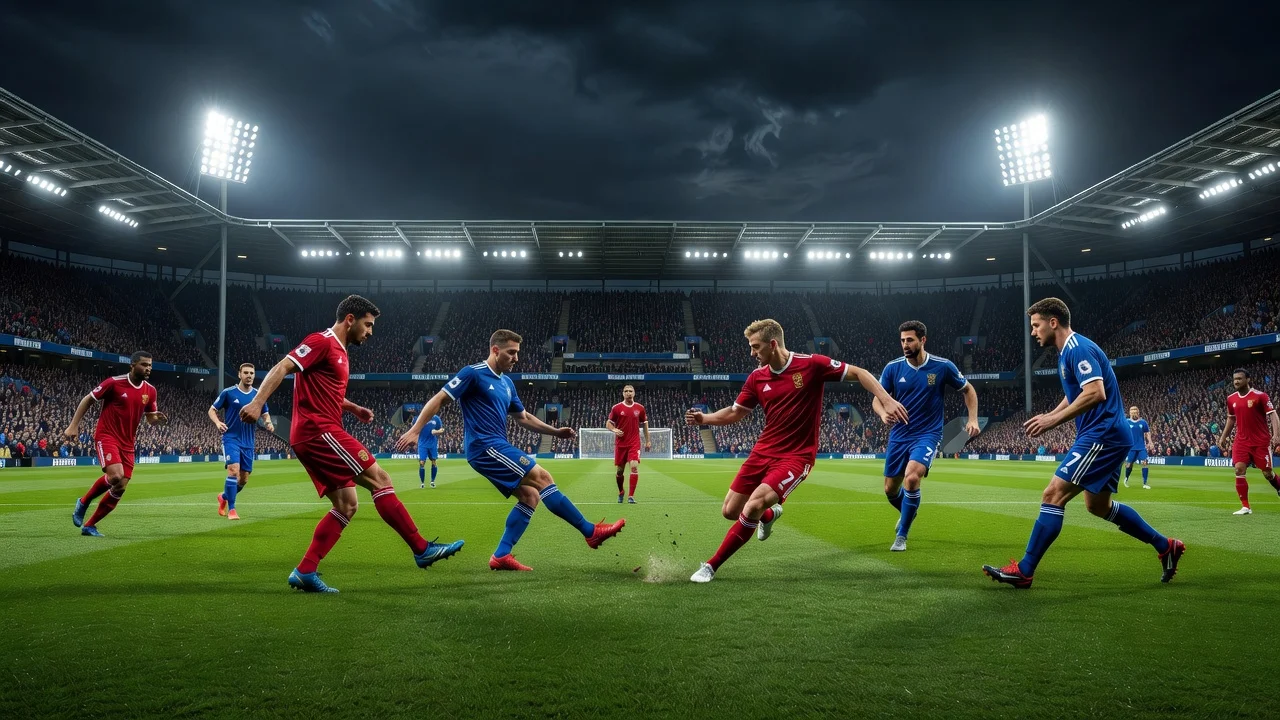
December is the month that breaks legs, tests depth and separates the prepared from the exposed. While leagues across Europe shut down for a winter pause, the Premier League does the opposite — it crams more football into a shorter window than at any other point in the season. Between mid-December and the first week of January, clubs routinely play six, seven or even eight matches in a span of three weeks. Managers who would normally keep changes to a minimum suddenly rotate five or six players per game, reshaping their starting XIs from one fixture to the next. This is not caution for its own sake. It is a calculated response to what exercise science has been telling the football world for over a decade: when the gap between matches shrinks below four days, the human body stops being able to fully repair itself, and the risk of muscle injury climbs sharply.
What happens to a footballer's body during a match
A 90-minute Premier League match is one of the most physically demanding events in team sport. A top-level midfielder covers roughly 11 to 14 kilometres, performs up to 200 sprints, changes direction dozens of times and absorbs repeated impacts through tackling and landing. Every explosive action — a burst into space, a shot, a sudden deceleration — loads the muscles, tendons and connective tissue with forces that exceed several times body weight.
The immediate aftermath is a cascade of physiological disruption. Muscle glycogen, the primary fuel for high-intensity effort, drops to critically low levels. In some fibre types, glycogen stores fall by as much as 75% during a single match, and the remaining reserves are what a player relies on if the game goes to extra time. Without a targeted carbohydrate intake plan, muscle glycogen can still be at only 50% of pre-match values two days later.
At the same time, muscle fibres themselves sustain micro-tears, particularly in the hamstrings, quadriceps and calves. These eccentric muscle contractions — where the muscle lengthens under load, such as during sprinting and deceleration — produce what exercise scientists call exercise-induced muscle damage. The consequences include reduced force production, elevated muscle soreness, impaired range of motion and increased stiffness. Markers of muscle damage in the blood, such as creatine kinase, remain elevated for 48 to 72 hours or more after a competitive match.
The hamstrings deserve special attention. They account for up to 24% of all injuries in modern professional football, and their proportion of total injuries has doubled over the past decade — from roughly 12% in the early 2010s to 24% by the early 2020s. Research published in 2024 found that hamstring strength remains significantly reduced at 72 hours after a match in both the dominant and non-dominant legs. Sprint performance over 10 and 30 metres is still impaired at that same point. The ability to generate maximum horizontal force — the mechanism that drives acceleration — has not yet returned to baseline. In plain terms, a player who runs out on the third day after a previous match is doing so with muscles that are measurably weaker, slower and more vulnerable to tearing.

The December fixture pile-up: by the numbers
No other major league in the world maintains the intensity of the English festive schedule. Spain, Germany, Italy and France all observe a winter break that lasts anywhere from two weeks to a month. The Premier League, by contrast, accelerates. The festive period typically runs from around 21 December to 6 January — a 17-day window in which 40 league matches are scheduled across multiple match rounds. Boxing Day alone, on 26 December, usually features eight to ten simultaneous fixtures and is often a team's third match in eight days.
The Premier League has attempted to address the most extreme cases by guaranteeing at least 60 hours between festive fixtures starting from the 2026/27 season. While this is an improvement over the 48-hour turnarounds that occurred in previous years, 60 hours remains well below the threshold that sports science considers safe for full physiological recovery.
Here is a comparison of recovery windows and their associated risk levels based on research from the UEFA Champions League injury study and subsequent systematic reviews.
| Recovery between matches | Physiological recovery status | Muscle injury risk | Typical December scenario |
|---|---|---|---|
| 48 hours or less | Severely incomplete — glycogen, strength and ROM all impaired | Highest | Rare even in PL, but has occurred with TV-scheduled fixtures |
| 60–72 hours | Incomplete — hamstring strength and sprint speed still below baseline | High | Common during Boxing Day and New Year rounds |
| 4 days (96 hours) | Partial — glycogen mostly restored, muscle damage markers still elevated | Elevated | Frequent in December for teams in multiple competitions |
| 5 days (120 hours) | Near-complete for most parameters | Moderate | Occasional during December for teams not in cup competitions |
| 6 days or more (144+ hours) | Essentially full recovery | Baseline | Rare in December — typical of normal league rhythm |
The data behind this table is striking. The 11-year UEFA Champions League injury study found that muscle injury rates in league matches played with four or fewer days of recovery were 32% higher than in matches with six or more days of rest. The increase was concentrated in hamstring and quadriceps injuries — the muscle groups most involved in sprinting and high-intensity effort. A separate systematic review of fixture congestion research confirmed that overall injury risk rises during congested periods, even though the average time lost per injury tends to be shorter, suggesting that players push through low-grade damage rather than allowing it to heal fully.
A FIFPRO survey of over 1,000 professional footballers found that 55% believed they had sustained injuries directly caused by fixture congestion, and 87% supported limiting the number of back-to-back matches with fewer than five days of recovery. Among coaches, 88% agreed that players should not exceed 55 games per season — yet December alone can account for 8 or 9 appearances for players at clubs competing on multiple fronts.
Why rotation is not optional in December
When recovery windows shrink below what the body needs, the only lever a manager can pull is reducing the load on individual players. Squad rotation in December is not about keeping everyone happy or giving fringe players a chance. It is a medical intervention disguised as a tactical decision. Every change to the starting XI represents an attempt to move a player from the high-risk column — where they would be playing their third match in eight days with incomplete muscle recovery — into a lower-risk window with additional rest.
Research supports the idea that rotation, when done well, reduces injury incidence without compromising performance. The UEFA Champions League study noted that fixture congestion had "no, or very limited, influence on team performance" when clubs used rotation and recovery strategies effectively. In other words, resting a key player does not necessarily cost points, but playing them on depleted legs can cost them weeks on the sideline.
The clubs that rotate most aggressively tend to confirm this pattern. Data from the 2025/26 Premier League season showed Chelsea making 66 changes to their starting XI between league matches — an average of 3.1 changes per game — while maintaining strong form through December and January. Tottenham (55 changes), Newcastle (51) and Aston Villa (49) followed a similar approach. At the opposite end, clubs that rotated least frequently had the highest injury counts. Crystal Palace, who made the fewest starting XI changes in the league, simultaneously carried the most injuries in the squad at nine players sidelined.
Several factors determine which players are rotated and when, and these go beyond simple fatigue management:
- Position-specific load — central midfielders and full-backs cover the most ground and perform the most high-intensity actions, making them prime candidates for rotation. Centre-backs and goalkeepers, who run less, can often sustain more frequent appearances.
- Age and injury history — players over 30 and those with a recent muscle injury are rotated more aggressively because their recovery timelines are longer. A 28-year-old midfielder might recover in 72 hours, while a 33-year-old with a history of hamstring strains may need 96 hours or more.
- Travel demands — away fixtures involving long-distance travel reduce recovery time further. A midweek Europa League match in Eastern Europe followed by a Sunday Premier League away game compounds fatigue through jet lag, sleep disruption and bus or plane travel.
- Match intensity — a high-speed derby with heavy pressing and physical contact extracts a higher toll than a controlled home win against a lower-table side. Sports scientists track this using GPS data on sprint count, accelerations and total distance to calculate individual load.
- Upcoming fixtures — if a critical match follows in three days, managers may protect key players in the current game to ensure they are available for the more important fixture. This is why rotation often appears heaviest before or after European matchdays.
These factors interact in complex ways. A central midfielder who has played 90 minutes in back-to-back games, travelled 800 kilometres between fixtures and is over 30 with a prior calf strain is a textbook rotation candidate — the data would flag them as being in the highest risk band for a muscle injury in the next match.
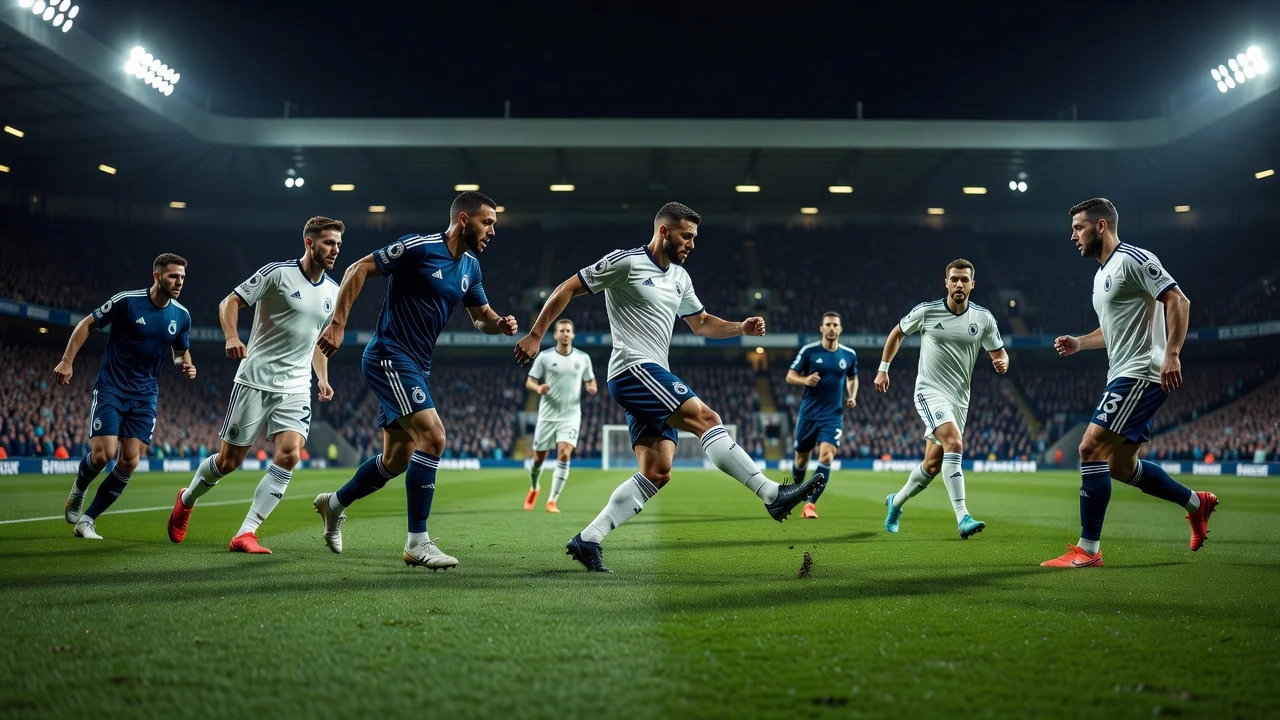
The physiological timeline of recovery
Understanding why 72 hours is not enough requires looking at what happens inside the body during each phase of post-match recovery. The following stages describe the biological repair process that a footballer goes through after a competitive match.
- 0–24 hours — muscle soreness peaks. Inflammatory markers rise as the body responds to micro-tears in muscle fibres. Hamstring strength is at its lowest point, often 15–25% below baseline. Range of motion is restricted. Sleep quality is frequently poor due to elevated core temperature and sympathetic nervous system activation. Players may feel deceptively fine because central fatigue masks peripheral damage.
- 24–48 hours — soreness begins to ease but is still present. Creatine kinase levels in the blood often peak during this window, indicating ongoing muscle damage. Eccentric force production — the type of contraction most relevant to sprinting and deceleration — remains significantly impaired. Glycogen stores are partially restored if carbohydrate intake has been optimal, but type II (fast-twitch) muscle fibres show delayed re-uptake.
- 48–72 hours — this is the window that December fixtures often squeeze into. Muscle soreness is reduced but not gone. Hamstring strength is still measurably below pre-match levels in both legs. Sprint performance over 10 and 30 metres remains impaired. The ability to generate maximum horizontal force — the quality that underpins acceleration — has not returned to baseline. Adductor strength may still be 15% or more below normal, increasing the risk of groin injuries.
- 72–96 hours — most metabolic markers (glycogen, blood markers of inflammation) approach normal values. Muscle soreness is largely resolved. However, residual neuromuscular fatigue — the ability of the nervous system to fully activate muscles — may persist, particularly in players who have accumulated load across multiple congested fixtures.
- 96 hours and beyond — the body is essentially restored to pre-match condition for most parameters. This is the threshold that the research literature treats as adequate recovery. It is also the point that December football rarely allows.
The gap between what the body needs and what the schedule provides is the engine that drives rotation. When a manager looks at the fixture list and sees three matches in eight days, they are not making a selection choice — they are managing a physiological deficit that science has measured in concrete terms. A player who starts all three games is being asked to perform at match intensity while their hamstrings are operating below full strength, their glycogen stores are not fully replenished and their neuromuscular system is still in repair mode.
How clubs try to close the recovery gap
Rotation is the primary tool, but it works in combination with a suite of interventions that sports science and medical teams deploy during December. These strategies cannot replace rest — nothing substitutes for time — but they can accelerate specific recovery processes and help players who must play through congested periods perform at a safer level.
Carbohydrate intake is engineered with precision. Recommendations call for 1.2 to 1.4 grams of carbohydrate per kilogram of body weight per hour, consumed at regular intervals starting immediately after the match, to maximise glycogen resynthesis. High-glycaemic-index foods are prioritised because they restore liver and muscle glycogen faster. Some clubs provide tart cherry juice and chocolate milk in the dressing room after the final whistle — the former for its anti-inflammatory properties, the latter for its optimal carbohydrate-to-protein ratio for muscle repair.
Sleep is treated as a performance variable. Late kick-offs disrupt circadian rhythms, and away travel further compresses sleep windows. Clubs use sleep hygiene protocols, darkened hotel rooms and, in some cases, melatonin supplementation under medical supervision to help players fall asleep faster after evening matches. Research has shown that high-glycaemic-index meals consumed four hours before bedtime reduce sleep onset latency compared with the same meal consumed one hour before, so timing of the post-match meal is coordinated with the sleep window.
Active recovery sessions replace traditional heavy training. The day after a match, players who featured do light cycling, pool work or mobility exercises rather than football-specific training. This promotes blood flow to damaged muscles without adding new load. Upper-body resistance training, which does not stress the recovering legs, is sometimes used within 24 hours of a match because it has been shown to accelerate hamstring force recovery through systemic circulatory effects.
GPS and wearable technology give medical staff real-time data on each player's load. Acceleration counts, sprint distances, high-speed running metres and total distance are tracked across every session and match. When a player's cumulative load exceeds a pre-determined threshold — calculated from their own historical data — the sports science team flags them for rotation or reduced training. This individualised approach is why two players in the same position may be treated differently: one may be within safe load limits, while the other has crossed into the danger zone based on their recent activity profile.
The cost of getting it wrong
When rotation is insufficient or absent, the consequences are visible and sometimes season-defining. Muscle injuries during December and January do not just sideline players for a match or two — they can cascade into longer absences that destabilise a club's entire campaign. A hamstring strain that might normally require two to three weeks of rehabilitation can become a six-week layoff if the player was already carrying accumulated fatigue and tissue damage from multiple congested fixtures.
The financial cost is equally significant. Premier League clubs invest tens of millions in transfer fees and wages for key players. Losing a starting midfielder or central defender for two months during the most decisive part of the season can be the difference between a top-four finish and a mid-table position, with Champions League qualification worth upwards of £50 million in broadcast revenue and prize money.
There is also the compounding effect. One injury forces another player to shoulder more minutes, pushing them into the high-risk zone. That player then sustains an injury, and the cycle accelerates. Teams with smaller squads or those competing in multiple competitions — domestic league, domestic cups and European fixtures — are particularly vulnerable. The 2025/26 season illustrated this pattern: clubs that played the most matches (Chelsea, Manchester City) also carried among the highest injury counts, despite relatively aggressive rotation.
Looking ahead: can the schedule be fixed?
The Premier League's decision to guarantee a minimum 60 hours between festive fixtures from the 2026/27 season is a step in the right direction, but sports scientists have been clear that it does not go far enough. The research consistently points to 96 hours as the minimum recovery window for physiological parameters to approach baseline, and 144 hours for full restoration. Sixty hours is roughly half of what the body needs.
The league abandoned its short-lived winter break after the 2023/24 season, choosing instead to ease the festive schedule rather than pause it entirely. This means December and January will continue to be the most demanding period of the season, and rotation will remain the primary defence against injury. Expanded competitions — the Champions League's league phase, the Club World Cup, international windows — only add to the calendar squeeze, giving players less time to recover between September and May than at any point in the history of professional football.
For managers, the message from the data is unambiguous: rotating in December is not about keeping the squad happy. It is about keeping it intact. The teams that emerge from the festive period with their best players still available are almost always the ones that treated the schedule not as a test of endurance but as a problem to be solved — one substitution, one rest day and one GPS report at a time.
Related analysis

What is a Grade 1 vs Grade 2 vs Grade 3 muscle tear? Recovery timelines explained with real Premier League examples
Grade 1, 2 and 3 muscle tears explained with real Premier League recovery examples. Understand the differences, treatment timelines and return to play.
2026-09-23
Suspended for yellow card accumulation: how each league's booking rules work and when a player sits out
How yellow card suspensions work across Premier League, La Liga, Serie A, Bundesliga, Ligue 1 and UEFA — when players sit out and how rules differ.
2026-09-23
Aphrodite Casino tournaments guide: weekly prize pools up to €100,000 and how to climb the leaderboard
Master Aphrodite Casino tournaments with our full guide: weekly prize pools up to €100,000, leaderboard mechanics, scori
2026-09-21
Betify casino app: PWA shortcut on Android and iPhone
The icon looks like an app. It is still the official URL. An APK from chat is not Betify.
2026-09-08