
Metatarsal Fractures: Football Return Timelines Explained
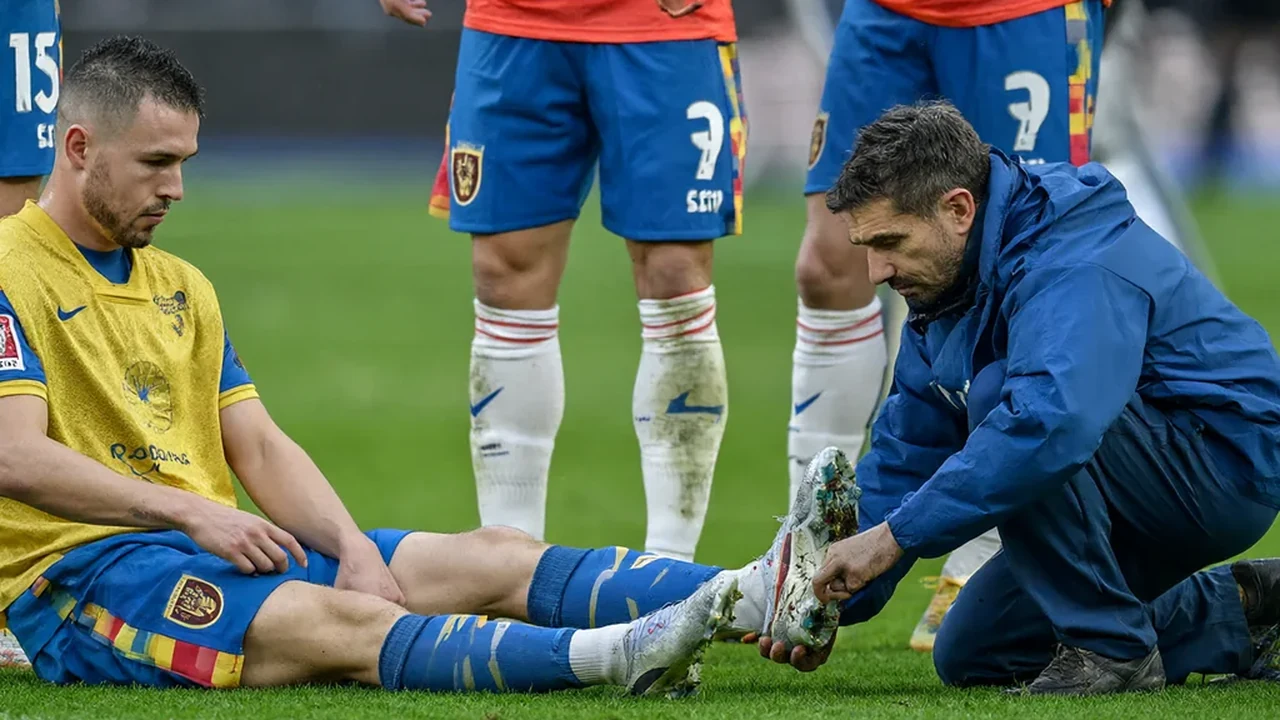
A foot fracture is announced with a straight face and a vague timescale, and supporters are left to guess whether the player will be back before the next international break or after it. The club statement usually says something like "he will be assessed over the coming weeks", which is honest but useless for planning. The reason is that a broken bone in the foot is not one injury. It is a family of injuries with different blood supplies, different mechanics and very different healing times.
Bone healing is biology on a clock nobody controls. A club can optimise loading, nutrition and protection, but it cannot make a fracture unite faster than the body allows. That is why the same word, fracture, can mean four weeks for one player and four months for another, and why the return date in the first bulletin is often revised twice before the player is available.
Why foot injuries are slow
The foot takes the entire body weight through a small number of bones, thousands of times per match. Every running stride loads the metatarsals, and every change of direction adds a bending force across them. A healing bone tolerates gradual load, not the sudden load of sprinting and cutting. The other issue is blood supply: some parts of the foot have a poorer blood supply than others, and the base of the fifth metatarsal is the classic example. Poor perfusion means slower union and a higher chance of the fracture failing to heal without intervention.
The fifth metatarsal is not one fracture
Most football foot fractures involve the fifth metatarsal, the bone on the outside of the foot, and clinicians separate at least three patterns. An avulsion fracture at the tuberosity is where a ligament pulls a fragment away; it is usually stable and heals well. A Jones fracture sits slightly further along, at the metaphyseal-diaphyseal junction, in a zone with limited blood supply, and it is the pattern most likely to be treated with surgery in a professional athlete. A shaft fracture or a diaphyseal stress fracture is a different problem again, often the result of repeated loading rather than one impact. Calling all three a broken metatarsal hides the only information that matters for a return date.
Typical absence by injury
The ranges below reflect commonly published return-to-play estimates for professional athletes. They are guides, not guarantees, and a club's own timeline will depend on imaging, the player's history and the position he plays.
| Injury | Typical absence | Milestone that unlocks the next stage | Notes |
|---|---|---|---|
| Fifth metatarsal avulsion | 4 to 6 weeks | Walking and then running without pain at the fracture site | Often managed without surgery |
| Jones fracture | 8 to 12 weeks, sometimes longer | Clinical union plus no tenderness on palpation | Higher risk of delayed or non-union because of poor blood supply |
| Metatarsal shaft fracture | 6 to 8 weeks | Pain-free running and a clear follow-up scan | Surgery depends on displacement |
| Metatarsal stress fracture | 4 to 8 weeks | Return to running with a graded load plan | Often linked to a sudden increase in training volume |
| Lisfranc (midfoot) injury | 12 to 20 weeks, sometimes a season | Stable midfoot under load and full weight bearing | Frequently surgical; the most unpredictable of the group |
The Jones fracture row explains most of the confusion around this injury. A club that says eight weeks is quoting the optimistic end of the range for a professional with a good scan. A club that says the player will be assessed in six weeks is acknowledging that union has to be confirmed before any running starts, and that the assessment may not produce good news.
Surgery or a boot
The choice between conservative care and an operation is a risk trade. Surgery can offer a more predictable timeline and a lower chance of non-union in a high-demand athlete, at the cost of an operation and its own recovery curve. Conservative care avoids surgery but can mean a longer period of protected weight bearing and a repeat scan before training resumes. Clubs rarely publish the reasoning, and a statement that says the player has had a procedure is not confirmation of how long he will be out. The absence estimate comes later, once the surgeon and the medical staff have seen how the fixation and the bone are behaving.
The bone heals before the player is ready
There is a gap between a united fracture and a player who can play. Once imaging shows union, the work shifts to loading: walking in normal shoes, then jogging, then running at speed, then changing direction, then contact. Each step can cause a reaction, and a reaction means backing off for a week. This is why a return date that looked solid at week six can move at week nine. The bone is not the whole story; the soft tissue around it has spent weeks unloaded and has to be rebuilt.
Warning signs a date will slip
- The club describes the player as working in the gym rather than on grass.
- Weight-bearing is described as partial for longer than the first few weeks.
- A follow-up scan is mentioned without a result.
- The statement repeats "no timescale" after the initial four-week window.
- The player is seen in a protective boot at a club event weeks after the injury.
- The return is described as being planned for after an international break.
None of those signals is proof of a setback. Together they usually mean the bone is being given more time, which is a decision clubs make readily when the alternative is a re-fracture. The same grading logic applied to muscle injuries is set out in our guide to hamstring grades and timelines, and the long-term version of the same problem is covered in the long road back from ACL surgery.
How to read the wording
Out of the boot means protected loading has ended, not that running has started. Back on the grass means individual work, usually without contact. In full training means the player has joined the group, which is still short of selection. Available means the manager has decided the risk is acceptable. When a club has not announced a scan result, the grade and the timeline are genuinely unknown, and the accurate phrase is not confirmed rather than a guess built from a similar injury at another club.
Related analysis

Season-Ending Injuries: Insurance and Squad Cost
A season-ending diagnosis is a sporting blow and a balance sheet event. How clubs price a year on the treatment table.
2026-09-02
Behind-Closed-Doors Friendlies: A Fitness Guide
Before the stadium comes the empty training pitch game nobody reports. How bounce matches bridge rehab and the real thing.
2026-08-31
Coming Back Too Early: The Reinjury Trap
The cruellest injury in football is the same one twice. Why comebacks fail and who pays for the rush.
2026-08-28
Hamstring Return Timelines, Week by Week
From ice baths to 95 percent sprint speed: the six-week map a torn hamstring has to travel before team training.
2026-08-24