
Do Yellow Cards Carry Over? Football Suspension Rules
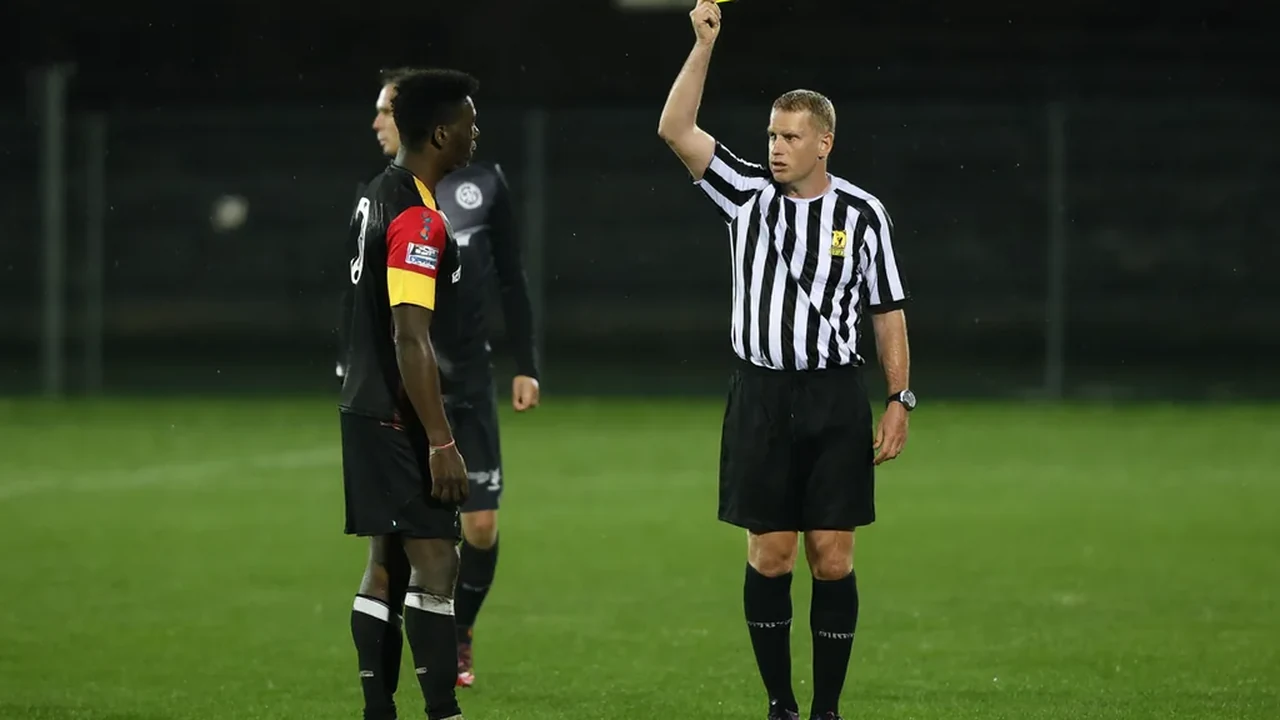
The question arrives every autumn, usually within minutes of a fifth booking. A midfielder collects his fifth yellow card of the league season, the co-commentator says he will miss the next game, and somebody reasonably asks whether he will also sit out the cup tie on Tuesday. The answer is no. Yellow cards do not travel with a player between competitions, and the suspension they create is served in the competition that produced it.
That single principle explains most of the confusion around suspensions. Cautions are recorded by the competition, not by the player's personal file, because each competition is run by a different body with its own disciplinary code. Once you separate the records, the apparently strange outcomes start to make sense: a player can be banned in the league and available in Europe in the same week, and a red card in one competition does not automatically rule him out of the next fixture in another.
Why records are kept apart
The Premier League, the English Football League, the FA Cup and the UEFA club competitions each publish their own disciplinary schedule and keep their own tally. The Premier League administers its own competition, the EFL runs the Championship, League One, League Two and the EFL Cup, the FA runs the FA Cup and the disciplinary framework beneath it, and UEFA runs the Champions League, Europa League and Conference League. Each body decides its own thresholds, its own amnesty points and its own rules on when cautions are cancelled. A player's league tally is therefore invisible to the cup competition, and vice versa.
The thresholds in the main competitions
Accumulation thresholds are the numbers that decide when a ban begins. The table below summarises the published domestic schedule and the European model; always check the current season's regulations, because the match numbers can be adjusted when the calendar changes.
| Competition | Caution threshold | Ban | When the record resets |
|---|---|---|---|
| Premier League | 5 by match 19 | 1 match | Threshold moves after match 19; 10 by match 32 brings 2 matches; 15 by the final matchday brings 3 |
| EFL league competitions | 5 by match 19 | 1 match | Second threshold at 10 by match 37 in a 46-game season, then 15 |
| FA Cup | 2 before the quarter-finals | 1 match | Competition-specific; the FA publishes its own schedule each season |
| UEFA club competitions | 3 | 1 match in that UEFA competition | Single cautions are cancelled at defined stages of the competition, including after the play-off round |
Two things follow from the table. First, the English league thresholds are front-loaded: the first amnesty arrives after 19 matches, so a player who reaches five cautions in October is banned immediately rather than in the spring. Second, the European threshold is lower but the record is wiped earlier, which is why a player can carry two cautions through a group stage and start the knockout rounds with a clean sheet.
What does travel with a player
Not all sanctions are competition-bound. A ban for violent conduct, for example, is a disciplinary outcome that can, depending on the charge, be applied across the game rather than confined to one competition, and an unserved suspension follows a player to his next club and into the following season. A red card, meanwhile, is served in the competition where it was issued: the standard one-match ban for a second caution or a denial of a goalscoring opportunity applies to the next fixture in that competition, not to whatever game happens to be next on the calendar. That is why a player sent off in a league match can, in principle, play in a cup tie before serving the league ban.
The 2026/27 picture in numbers
Premier League disciplinary data for the season that began on 21 August 2026 offers a useful snapshot as of 12 October 2026. The most cautions collected by a single player stood at five, held by Vitaly Janelt of Brentford, which is exactly the point at which the first threshold bites. Hull City had collected the most cautions as a club with 20, while Coventry City had the fewest with four. Brentford had the most red cards with two, and nine clubs had none. Those numbers illustrate how quickly a squad can accumulate risk: 20 cautions across a club in the opening weeks is a rotation problem waiting to happen.
What the rule means in practice
- A league booking does not follow a player into the FA Cup or the EFL Cup.
- A cup booking does not add to the league tally, so a cup run cannot trigger a league ban.
- A red card ban is served in the competition where the red card was shown.
- European cautions are tracked separately and wiped at defined stages.
- An unserved ban can follow a player into a new season or a new club.
- Thresholds are counted in matches, not in weeks, so postponed fixtures can delay a ban.
The last point catches people out during a fixture pile-up. If a match is postponed, the match number does not pass, and a player sitting on four cautions can stay on four for longer than expected. Clubs track this closely because the difference between a ban landing in a league game and a ban landing in a cup tie is a selection decision, not a formality.
Where to be careful
Appeals and retrospective action can change a ban after the fact, and a club that says it is "reviewing the decision" has not confirmed anything. The written reasons published after a disciplinary hearing are the reliable source, not the first report on the night. If a player's availability for a specific fixture matters to you, check the competition's own disciplinary page rather than a summary: the record is kept per competition, and that is the whole point. Our explainer on yellow card totting-up covers how the count is applied week by week, and the knock-on effect on selection is covered in how predicted lineups are actually built.
Related analysis

Touchline Bans: When Managers Get Suspended
The manager can watch from the stands but the phone lines are restricted. What a touchline ban actually forbids.
2026-09-01
Retrospective Bans for Diving and Violent Conduct
Getting away with it on Saturday no longer means getting away with it. How retrospective action really works.
2026-08-30
UEFA Suspension Rules on European Nights
European yellow cards follow different maths. Three bookings, not five, and a wipe that arrives too late for some.
2026-08-26
Red Card Bans and How the Appeals Process Works
A straight red is not always three games. The tariff, the appeal window, and the famous rescinded reds.
2026-08-22