
Suspended for yellow card accumulation: how each league's booking rules work and when a player sits out
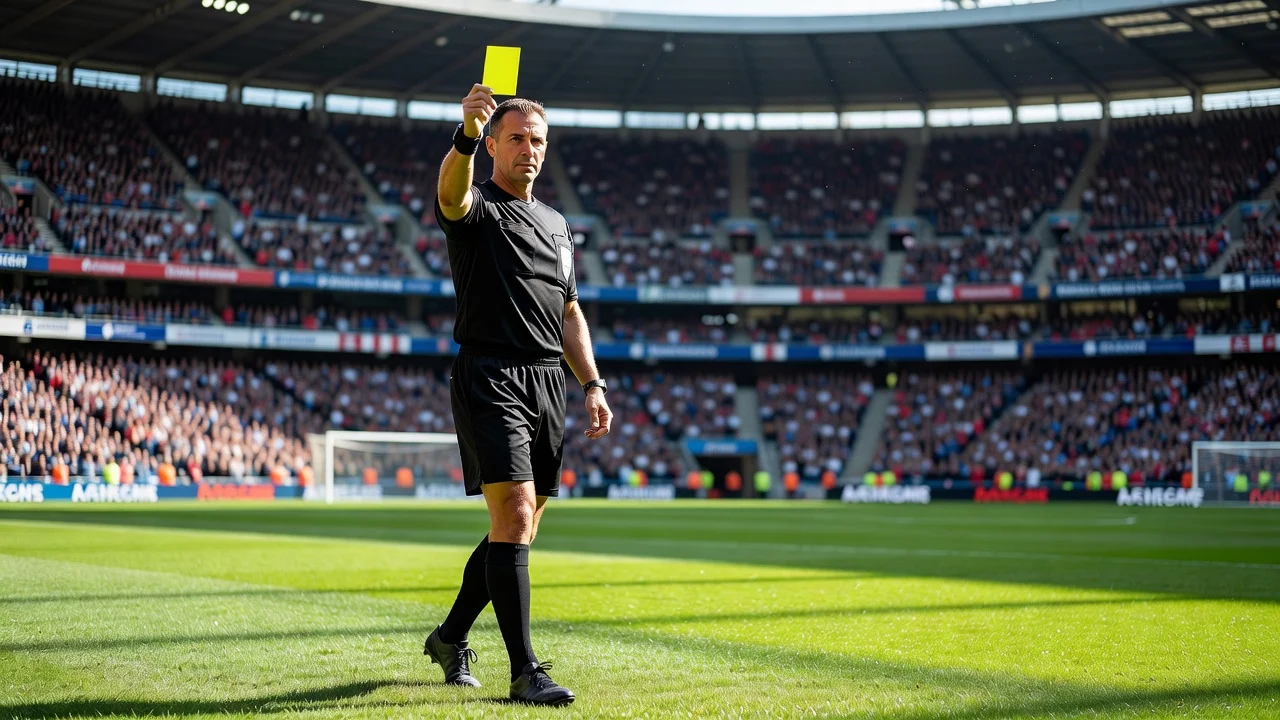
A midfielder picks up his fifth yellow card of the season in the 89th minute of a routine win. The crowd groans, the coach shakes his head on the touchline, and the player himself barely reacts — he already knows what comes next. One mistimed tackle, one moment of frustration, one tactical foul to stop a counter-attack, and suddenly he is watching from the stands instead of starting the next match. Yellow card suspensions are one of the most quietly disruptive forces in football. They sideline key players at unpredictable moments, force managers to reshuffle their starting XIs, and often arrive at the worst possible point in the season — during a fixture pile-up, a derby week, or a title-deciding run-in. Yet the rules that govern when a player sits out are far from uniform. Every league has its own thresholds, its own reset points, its own quirks. What earns you a ban in the Premier League might not trigger anything in Serie A until two cards later. Understanding these differences is essential for anyone who follows the game closely, whether you are a manager planning squad rotation, a fantasy football player weighing a captain's risk, or a fan wondering why your star defender is suddenly unavailable for the biggest match of the season.
The principle behind yellow card suspensions
The yellow card system exists to deter repeat offences and protect the flow of the game. A single caution is a warning — a signal from the referee that a player's behaviour has crossed a line, whether through a reckless foul, dissent, time-wasting or unsporting conduct. But football's lawmakers recognised early that one yellow card in isolation is not much of a deterrent if a player can collect them week after week without consequence. The accumulation rule was designed to address exactly that: players who consistently push the boundaries will eventually face a suspension, even if no single incident was serious enough to warrant a direct red card.
The logic is straightforward in principle. Once a player reaches a certain number of cautions within a defined period — usually the first half of the league season or a specific competition stage — they are automatically suspended for one match. The suspension applies to the next domestic league game in most cases, though competitions like the Champions League and Europa League have their own separate accumulation windows. After the threshold is met and the suspension served, the count typically resets, and the player starts again from zero in the second half of the season.
Where it gets complicated is in the details. Different leagues set different thresholds, apply different reset dates, handle carry-over rules differently, and treat cautions picked up in separate competitions as entirely independent. A player could be one yellow away from a ban in the Premier League and simultaneously sitting on a clean slate in the Champions League, because the two competitions do not share their disciplinary records. This is why the same player can be available for a midweek European fixture but suspended for a weekend league match — a scenario that confuses fans every season.
How the major leagues compare
Each of Europe's top five leagues plus UEFA's club competitions has its own framework for yellow card accumulation. The thresholds, reset points and suspension lengths all differ, which means a player who is safe in one competition might be walking a tightrope in another. The following overview captures the key parameters side by side, covering when a suspension kicks in, when the count resets, and what happens to cards that arrive late in the season.
| Competition | First suspension at | Reset point | Second threshold | What happens at season's end |
|---|---|---|---|---|
| Premier League (England) | 5 yellow cards | After 19 league matches (half-season) | 10 yellow cards by match 32 | Cards after match 32: 2 yellows = 1-match ban; 15 total = FA review |
| La Liga (Spain) | 5 yellow cards | After match 19 (half-season) | 10 yellow cards (second half) | Carried to second half if not yet served |
| Serie A (Italy) | 5 yellow cards | After match 19 (half-season) | 8 yellow cards (second half) | Automatic 1-match ban at each threshold |
| Bundesliga (Germany) | 5 yellow cards | After match 17 (half-season) | 10 yellow cards (second half) | Extended ban possible for 15+ yellows |
| Ligue 1 (France) | 3 yellow cards | After match 19 (half-season) | 6 yellow cards (second half) | Strictest threshold among top five leagues |
| UEFA Champions League | 3 yellow cards | After the group/league phase ends | Reset before knockout stage | Cards from league phase carry into knockouts unless already served |
A few patterns emerge from this comparison. The Premier League, La Liga and Bundesliga all set their first threshold at five yellows, which is the most common standard across European domestic leagues. Serie A matches that threshold in the first half but tightens to eight in the second half, making it slightly harder to avoid a second ban. Ligue 1 stands out as the strictest, with a ban after just three yellow cards — a rule that frequently catches players and fans off guard, especially those accustomed to the more lenient five-card threshold used elsewhere.
UEFA's club competitions operate on an entirely separate track. The Champions League and Europa League reset their yellow card counts after the league phase, which means a player who picked up two yellows in the group stage starts the knockout rounds with a clean slate. However, any unserved suspension from the final league-phase matchday carries over to the first knockout game. This is a critical detail that has affected several high-profile matches in recent seasons, when a player received a third yellow on the last matchday and was forced to miss the round of 16 first leg.
The Premier League's system in detail
The English top flight has one of the most nuanced yellow card frameworks in world football. The season is divided into two halves, each with its own accumulation window, and the rules change again in the final stretch of the campaign. For the first 19 matches, any player who accumulates five yellow cards serves an automatic one-match suspension in the next Premier League fixture. The count then resets to zero, and a new window opens for the second half of the season.
In the second half, the threshold rises to ten yellow cards across the remainder of the campaign, up to and including the 32nd match. If a player reaches ten yellows by match 32, they serve a one-match ban. After match 32, the rules tighten further: a player who picks up two additional yellows (bringing their total to 12) after this point receives another one-match suspension. The final escalation comes at 15 yellow cards for the entire season, which triggers a Football Association review and can result in an extended ban at the discretion of a regulatory commission.
These thresholds are based on Premier League matches only. Yellow cards picked up in the FA Cup, EFL Cup or European competitions do not count toward the league total. A player could theoretically receive three yellows in a Champions League week and still be available for the next Premier League match, because the competitions maintain separate disciplinary ledgers. Conversely, a yellow card received in a Premier League match does not carry over to a cup fixture — the suspension, if triggered, applies only to the next Premier League game.
One particularly frustrating scenario for clubs involves the timing of the suspension relative to the fixture calendar. If a player receives their fifth yellow in a Saturday match, they miss the next Premier League game — but if the next fixture is a cup match, the suspension carries over to the following league game instead. This can create a gap of two weeks between the offence and the actual suspension being served, which sometimes means the player is unavailable for a crucial league match that falls immediately after a cup round.

How other leagues handle their own quirks
While the basic structure of five yellows equals a ban is shared across most leagues, each competition adds its own layer of rules that can surprise even seasoned followers of the game. Understanding these league-specific details is what separates a general awareness of the system from a genuine command of how it plays out over a season.
The following breakdown highlights the most important league-specific rules that differ from the common pattern:
- Ligue 1's strict three-card threshold — France operates the tightest accumulation rule in Europe's top five. Three yellow cards in the first 19 matches trigger a one-match ban, and the same threshold applies in the second half. This means a player who is cautious enough to avoid a ban in England or Spain could easily sit out a match in France for the same level of disciplinary record.
- Serie A's second-half tightening — Italy reduces its threshold from five yellows in the first half to eight in the second half, but the eight-card count applies only to cards received after the reset, not the full season total. This effectively gives players a fresh start while maintaining a relatively strict standard throughout.
- Bundesliga's matchday structure — Germany's 18-team league has 34 matchdays, so the half-season reset falls after match 17 rather than 19. The Bundesliga also has a unique escalation: players who reach 15 yellow cards across the full season face a longer ban determined by the DFB sports court, rather than an automatic fixed suspension.
- La Liga's carry-over quirk — Spain applies the five-card threshold in the first 19 matches and ten in the second half, but if a player receives their fifth yellow in the final match before the reset, the suspension is served in the first match of the second half — meaning the ban technically falls in the new window.
- Premier League's post-match 32 escalation — England is the only league among the top five that introduces a separate, lower threshold (two yellows) for the final six matchdays, reflecting the heightened stakes of the season's closing stretch and the desire to curb cynical fouls in decisive matches.
These league-specific rules mean that a player moving between leagues — as many do each transfer window — needs to adjust their behaviour on the pitch. A midfielder accustomed to Ligue 1's three-card limit might find the Premier League's five-card threshold more forgiving, while a player moving from England to France could be shocked to find themselves suspended after what felt like a modest disciplinary record. Coaches familiar with one league's system regularly have to recalibrate their tactical foul strategies when managing in a new country.
When yellow cards become red: the double-jeopardy scenario
A separate but related rule governs what happens when a player receives two yellow cards in the same match, resulting in an automatic red card. In this case, the player is sent off and serves a one-match suspension for the dismissal — but those two yellows also count toward their season accumulation total. This creates a double-jeopardy scenario where the player is punished twice for the same incident: once with a red card suspension, and again by having both yellows added to their running total.
For example, a player on four yellow cards for the season who receives two yellows in a single match is sent off and misses the next game through the red card. But those two yellows bring their season total to six, which exceeds the five-card threshold and triggers an additional one-match suspension on top of the red card ban. In practice, most leagues treat the red card suspension as taking priority, and the accumulation suspension is served in the match immediately following the red card ban. The player effectively misses two consecutive matches — one for the sending-off and one for the accumulation — despite the yellows coming from the same game.
Not all leagues handle this overlap identically. The Premier League applies both suspensions consecutively, meaning the player sits out two matches. Serie A and La Liga generally follow the same principle. However, some leagues have introduced rules to prevent the most extreme cases of double punishment, particularly when both yellows are clearly part of the same incident rather than separate offences spread across the match. The interpretation ultimately depends on each league's disciplinary commission and whether the player or club chooses to appeal.
The tactical dimension: playing on a yellow
Managers spend a surprising amount of time thinking about yellow card accumulation. A player on four yellows going into a crucial match faces a tactical dilemma: play with full intensity and risk a suspension for the next game, or hold back and potentially underperform. Some coaches choose to rest players who are one card away from a ban, particularly if the next match is against weaker opposition and the following fixture is far more important. Others take the opposite approach, telling the player to play their normal game and accept the risk, because artificially restraining a key player's aggression can be more costly than a one-match absence.
The strategic considerations that influence this decision are numerous and vary from match to match:
- Opposition strength — if the next fixture is against a bottom-half side, resting the at-risk player becomes more viable. If the next match is a top-six clash, the manager may decide the risk of suspension is worth taking.
- Squad depth — teams with strong benches can absorb a one-match suspension more easily than sides with thin squads, making rotation a practical option.
- Position-specific risk — defensive midfielders and aggressive full-backs accumulate yellows faster than most other positions because of the nature of their role. Managers factor this into whether a player should be told to temper their approach.
- Timing within the season — a fifth yellow picked up in match 18 is less damaging than one received in match 6, because the reset is imminent and the player would miss only one game before starting fresh.
- Competition context — if a team has a cup match between league fixtures, a suspension from a league yellow may carry over further than expected, which complicates the rotation plan.
- Appeal prospects — clubs sometimes appeal yellow cards they believe were unjustly given, though success rates are low unless the referee's report is demonstrably incorrect.
These calculations are part of why managers employ analysts and sports scientists not just for physical performance but for disciplinary modelling. Knowing which players are on the edge of suspension, and how that interacts with the fixture list, is now considered a standard part of match preparation at the highest level of the game.
Do cup and European yellows count separately?
One of the most common sources of confusion is whether yellow cards from one competition carry over to another. The short answer is no — with one important exception. Each competition maintains its own disciplinary record. Premier League yellows apply only to Premier League matches. FA Cup yellows apply only to FA Cup matches. Champions League yellows apply only to Champions League matches. A player could receive five yellows across a combination of league and cup games and not trigger any suspension, because the counts are tracked independently.
The exception involves domestic cup competitions that share a disciplinary framework. In England, yellow cards received in the EFL Cup and the FA Cup are tracked separately from the league, but within each cup competition, accumulation rules still apply. If a player picks up two yellows across two separate FA Cup matches, that does not trigger a suspension under the league's five-card rule, but the FA Cup has its own accumulation thresholds that could result in a cup-specific ban. The same principle applies in other countries: Spain's Copa del Rey, Italy's Coppa Italia and Germany's DFB-Pokal each have their own yellow card rules that are entirely separate from the league.
UEFA competitions follow their own distinct system. In the Champions League, a player who accumulates three yellow cards during the league phase receives a one-match suspension. The count then resets before the knockout stage, giving every player a fresh start — unless they received their third yellow on the final matchday of the league phase, in which case the suspension is served in the first knockout match. This reset is particularly significant because it means a player who was one card away from a ban throughout the group stage enters the knockouts with zero yellows, regardless of how many they collected earlier.
The Europa League and Europa Conference League follow the same principle, with three yellows triggering a ban and a reset before the knockout rounds. However, yellow cards received in the Champions League do not carry over to the Europa League if a team drops into the latter competition — a scenario that became more common after UEFA restructured its competitions, allowing third-placed Champions League teams to enter the Europa League knockout play-off round.
What happens to unserved suspensions
Sometimes a player triggers a suspension but does not serve it immediately because the next fixture is in a different competition. In these cases, the suspension waits. A Premier League ban caused by yellow card accumulation must be served in the next Premier League match, regardless of how many cup or European games fall in between. If a player receives their fifth yellow on a Saturday and the club has a Champions League match on Wednesday followed by a Premier League game on the following Saturday, the suspension applies to that Saturday league match — not the midweek European fixture.
The same principle works in reverse. A Champions League suspension caused by yellow accumulation must be served in the next Champions League match, even if there are league games in between. This is why fans sometimes see a key player appear in domestic matches but suddenly miss a European knockout tie — the suspension was triggered weeks earlier but only becomes active when the relevant competition's next match arrives.
At the end of a season, unserved suspensions from yellow card accumulation generally do not carry over to the next season in domestic leagues. However, suspensions from red cards — including those resulting from two yellows in a single match — can carry over if they were not served before the campaign ended. UEFA competitions have their own rules regarding carry-over suspensions between seasons, and these are typically applied to the first match of the next European campaign if the ban was not served in the current one.
Understanding these rules does not just satisfy curiosity — it shapes how we interpret team selections, injury reports and the sudden absences that can define a season. The next time a manager makes a puzzling substitution in the 70th minute, or a key player is unexpectedly absent from a teamsheet, the explanation may be sitting quietly in the disciplinary ledger, five yellow cards deep and finally come due.
Related analysis

What is a Grade 1 vs Grade 2 vs Grade 3 muscle tear? Recovery timelines explained with real Premier League examples
Grade 1, 2 and 3 muscle tears explained with real Premier League recovery examples. Understand the differences, treatment timelines and return to play.
2026-09-23
Why Premier League teams rotate so much in December: the science of fixture congestion and muscle injury risk
Why Premier League teams rotate heavily in December: the science of fixture congestion, muscle recovery, hamstring injury risk and squad rotation strategy explained.
2026-09-23
Aphrodite Casino tournaments guide: weekly prize pools up to €100,000 and how to climb the leaderboard
Master Aphrodite Casino tournaments with our full guide: weekly prize pools up to €100,000, leaderboard mechanics, scori
2026-09-21
Betify casino app: PWA shortcut on Android and iPhone
The icon looks like an app. It is still the official URL. An APK from chat is not Betify.
2026-09-08