
Season-Ending Injuries: Insurance and Squad Cost

When a club doctor says the words season-ending, two meetings happen within the hour. The first is with the manager about the squad. The second is with the finance director about the insurance policy, because a long-term injury to a first-team player is a sporting crisis and a balance sheet event with a claims form attached.
The true cost of losing a starter for a year is bigger than most supporters imagine, and the mechanisms clubs have built to survive it explain a lot of January transfer behaviour.
Counting the real cost
Start with the wage bill. A senior Premier League player on a hundred thousand pounds a week costs his club over five million pounds a season whether he plays or not, and the contract pays him through every month of rehab. Add the performance cost: analysis of league seasons consistently shows that long-term absences of key players move expected points totals by amounts that dwarf the transfer fee of a decent replacement. Then add the residual value problem, because a player who loses a year to an ACL returns into a market that prices him on what he did before the injury, not what he might do after it.
The insurance market exists because of this arithmetic. Clubs can buy policies covering the wages of injured players, typically kicking in after an excess period of thirty to ninety days and paying the salary for the length of the absence. Premiums for a top-flight squad run into seven figures a year, and the underwriters read medical histories the way managers read scouting reports. Players with long injury records become expensive to insure, which quietly shapes contract offers and transfer decisions in ways fans never see.

The squad planning response
A season-ending diagnosis in autumn triggers a well-rehearsed sequence.
- The insurance claim is filed within days, starting the wage recovery clock.
- The medical team maps the rehab against next season's calendar, because the return target is pre-season, not this one.
- The recruitment department opens the shortlist for the position, with the January window two months away.
- The academy is scanned for internal cover, the cheapest solution if a prospect is ready.
- The manager publicly calls the absentee irreplaceable while privately planning to replace him.
| Cost type | Typical scale | Mitigation |
|---|---|---|
| Wages during absence | Millions for a senior starter | Wage insurance after the excess period. |
| Replacement signing | January premium pricing | Loan market or internal promotion. |
| Performance drop | Points lost across months | Squad depth built in the summer. |
| Resale value erosion | A year off the player's peak market | Nothing, once it happens. |

The safety nets and their limits
Two distinct insurance worlds sit behind every long absence, and they do not overlap. The FIFA Club Protection Programme covers only injuries sustained on senior international duty, a narrow slice of the calendar, and pays a fraction of an elite salary. The wider market, built around the Lloyd's of London ecosystem that has insured athletes for a century, is where clubs buy wage-cover policies for injuries suffered anywhere, priced on medical history and minutes load. Premiums rise sharply for players with recurring soft-tissue records, which is one reason injury-prone veterans find contract offers shrinking in length as they age.
Players hold their own policies too, including career-ending cover that pays out if the injury ends everything. Those cases are the sobering extreme of the business: a medical retirement triggers the policy, the insurance settles the financial loss, and the sport loses the player to an office career years early. The money matters, and clubs plan around it meticulously, but every document in the filing cabinet exists because a scan showed something no spreadsheet can fix.
Why February injuries sting most
There is a human footnote the spreadsheets never capture. The injured player remains on the payroll, in the building, in rehab while the squad travels, for the better part of a year. Clubs have learned to keep long-term absentees integrated, in meetings and at matches, because a player written off as an accounting line rarely returns as the asset the policy insured. The money protects the club. Only the people protect the player.
The calendar shapes the cruelty. A season-ending injury in October leaves the January window as an escape hatch and insurance to absorb the wages. The same diagnosis in February, after the window closes, offers neither: the squad is locked, the cover must come from within, and the run-in arrives with a hole in it. That is why the team news of early spring is read with particular anxiety by the clubs chasing something. The phrase like a new signing, attached to a player returning in March, is a financial statement as much as a football one. His return is the only recruitment the spring will allow.
Related analysis
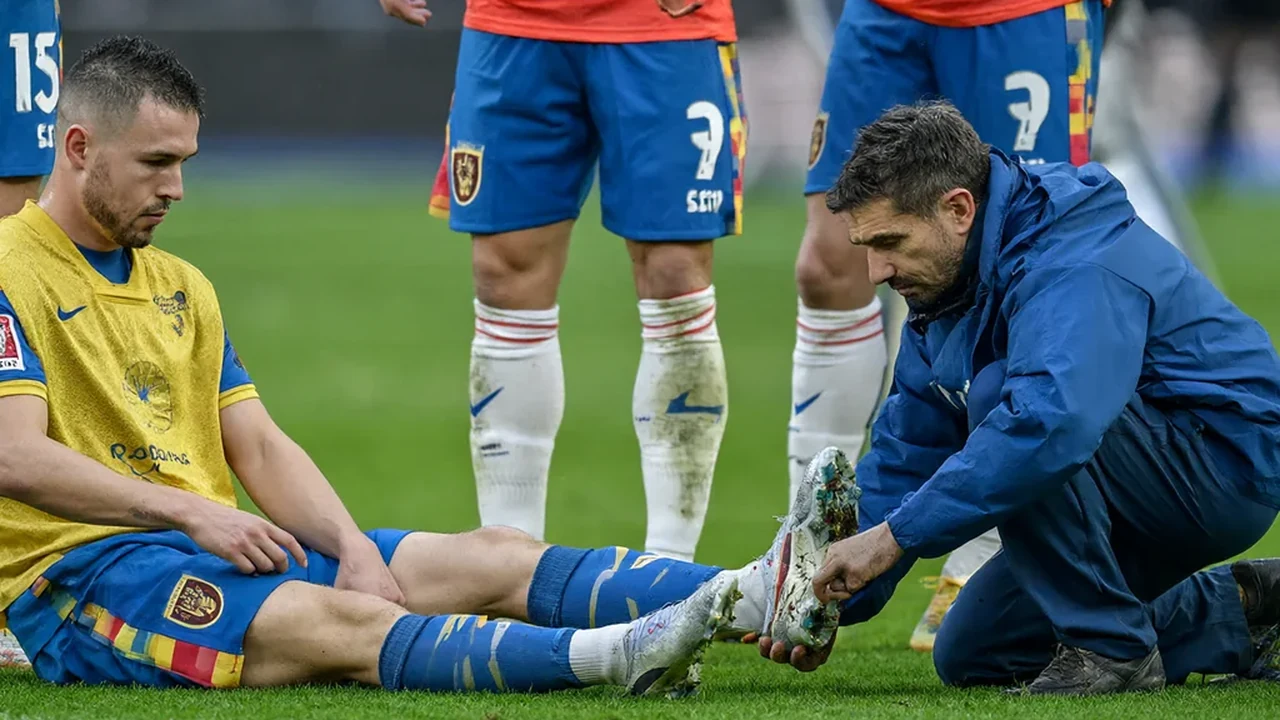
Metatarsal Fractures: Football Return Timelines Explained
Avulsion, Jones, shaft and stress fractures heal at different speeds. The absence each usually carries and why dates slip.
2026-10-18
Behind-Closed-Doors Friendlies: A Fitness Guide
Before the stadium comes the empty training pitch game nobody reports. How bounce matches bridge rehab and the real thing.
2026-08-31
Coming Back Too Early: The Reinjury Trap
The cruellest injury in football is the same one twice. Why comebacks fail and who pays for the rush.
2026-08-28
Hamstring Return Timelines, Week by Week
From ice baths to 95 percent sprint speed: the six-week map a torn hamstring has to travel before team training.
2026-08-24