
ACL Injuries in Football: The Long Road Back

Seventeen October 2020, Goodison Park. Virgil van Dijk chased a loose ball, Jordan Pickford came through him, and the Liverpool defender walked off with a torn anterior cruciate ligament. He did not play a competitive match again until the following September. Eleven months for the best centre-back in the world, with the best medical care money buys. That is what an ACL does to a calendar.
The anterior cruciate ligament is the knee's main stabiliser against rotation, and football asks knees to rotate under load hundreds of times a match. When it goes, the rehabilitation is the longest routine in the sport, and the most rigidly staged.
Surgery first, patience always
The standard repair reconstructs the ligament with a graft, most often taken from the player's own patellar tendon or hamstring. The graft needs months to biologically incorporate, to turn from a piece of tendon into a living ligament, and no amount of gym work accelerates that biology. Surgeons talk about ligamentisation taking the better part of a year, which is why the nine-month mark has become the sport's unofficial benchmark for a return to full training.
Zlatan Ibrahimovic tore his cruciate playing for Manchester United against Anderlecht in April 2017, at thirty-five years old, and was back on a Premier League pitch that November, around seven months later. It remains one of the fastest elite comebacks on record, and even that outlier took more than half a year. Van Dijk's eleven months is closer to the modern norm, because surgeons now favour patience over headlines.

The stages every comeback must pass
The road back is a sequence of gates, and each one has objective tests rather than vibes. Strength is measured against the healthy leg, and most protocols demand the repaired leg reaches 90 percent of that baseline before running begins. The journey looks like this, give or take a month either way.
| Stage | Approximate timing | Goal before moving on |
|---|---|---|
| Post-surgery | Weeks 1 to 6 | Full extension, swelling gone, walking normally. |
| Strength base | Months 2 to 4 | Single-leg strength at 70 percent of the good leg. |
| Running reintroduction | Months 4 to 6 | Straight-line running pain-free at increasing speed. |
| Change of direction | Months 6 to 8 | Cutting, pivoting and landing without hesitation. |
| Team training | Month 9 onwards | Full contact sessions and bounce games behind closed doors. |
The stage that breaks most comebacks is the fourth. Running straight is easy compared to planting the foot and turning, which is precisely the movement that tore the ligament. Players describe the mental barrier as bigger than the physical one, trusting the knee again when an opponent is closing down.

The psychology of the long rehab
Nine months alone with a knee changes people. Players who have been through cruciate rehabilitation describe the same arc in interview after interview: the first month of shock and dependence, the middle months of grinding gym work while teammates travel to matches, and the final stretch where the body is ready and the mind is not. Clubs now employ sports psychologists specifically for long-term injured players, because the evidence says the mental load predicts the quality of the return as reliably as the strength numbers.
The fears follow a recognisable pattern:
- The first contact session, when someone else's boot arrives near the repaired knee.
- The first full sprint, where the player discovers whether he trusts the leg at maximum effort.
- The first matchday squad, when the pace of the real game exposes months of controlled drills.
- The first setback, which almost everyone has, and which hits harder than the original diagnosis.
Ibrahimovic, never a man to admit doubt, titled the relevant chapter of his own story around the idea that he had to conquer himself before he could conquer the recovery. That is the part of the ACL calendar no scan shows, and it is the reason the final stage, return to performance, belongs to the player rather than the physio.
Why clubs never promise a date
Watch how the great clubs handle the announcement and the pattern holds: surgery confirmed, no public timeline, and then months of carefully rationed footage, a gym clip here, a running session there. The drip of content reassures supporters without committing the medical team to anything. By the time the player rejoins group training, the comeback has been narrated for half a season, and the only surprise left is the name on the teamsheet.
Notice how clubs phrase these injuries: a serious knee injury, surgery successful, no timeframe. The vagueness is deliberate. The graft either matures on schedule or it does not, setbacks are common enough that smart medical departments budget for one, and a public deadline only adds pressure that helps nobody. The honest answer to when an ACL patient returns is always the same. Around nine months if everything goes right, a year if anything goes wrong, and the difference is invisible until month six.
Related analysis
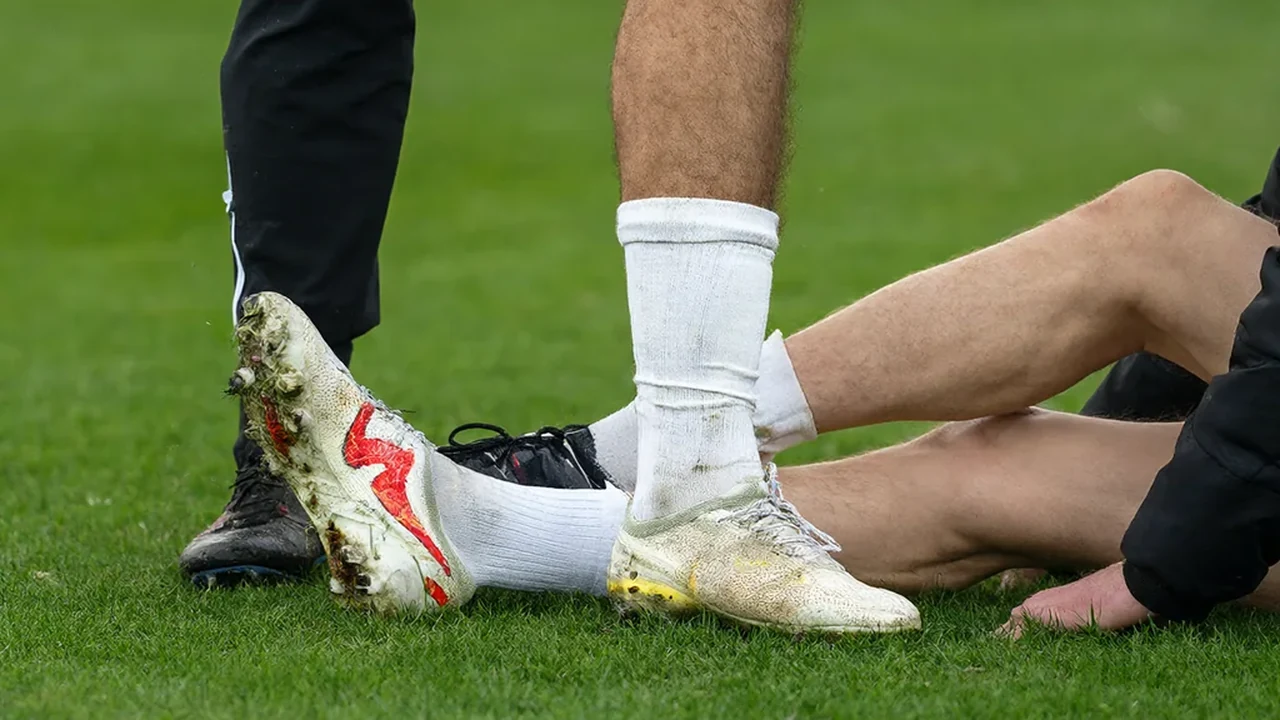
Ankle Sprains in Football: Grades and Return Timelines
What grade 1, 2 and 3 ankle sprains mean, the weeks attached to each and why the same ankle keeps rolling.
2026-10-18
Injury round-up: what clubs said after the October break
Six clubs, one weekend, and very few return dates: what the October injury updates actually said.
2026-10-18
How to read club injury statements
A practical decoder for the phrases clubs use, from out for weeks to no timescale at all.
2026-10-18
FPL flags and chance of playing explained
Yellow, orange, red: how FPL percentages are set and what to do with a 25 per cent flag.
2026-10-18