
How to read club injury statements
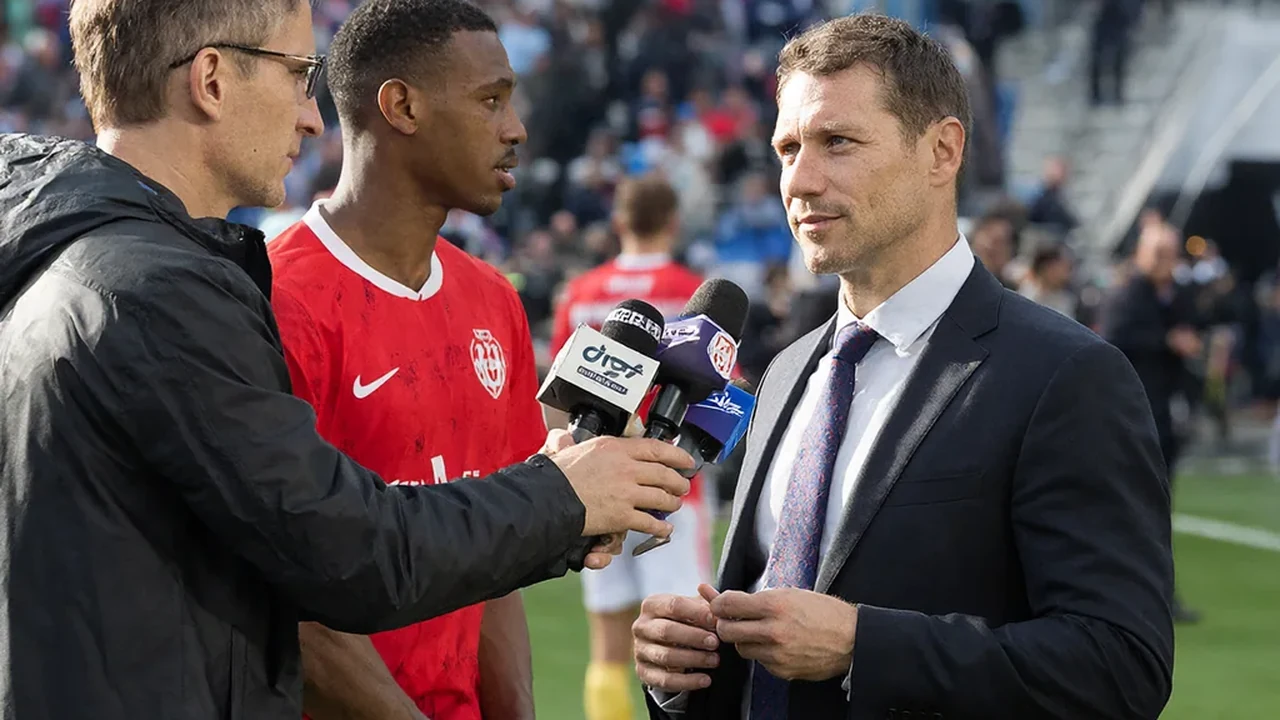
Every Friday afternoon the same ritual plays out at twenty training grounds. A manager sits down, is asked about six players, and answers in a code that sounds like information but is often the opposite. The October international break produced a perfect sample: Hincapie out for weeks, Zubimendi close, Szoboszlai at 25 per cent, Sesko getting there, a Tottenham new signing out for some weeks, Branthwaite and Mykolenko facing fitness tests. None of those phrases means the same thing, and two of them do not mean anything at all.
Four questions behind every update
Strip out the politeness and a club statement answers four questions. Is the player available for selection. Is he training with the group. Has he been scanned, and what did the scan show. Does the medical staff have a date. Most statements answer only the first, and the order in which a manager mentions players often tells you which of them he has already written off. When Arteta grouped Hincapie and Zubimendi together before the Lille tie and called the situation far from ideal, the useful information was not the adjective. It was that one player had a weeks-based timeline and the other was being tested.
Out for weeks
This is the most useful phrase in football and the most abused. It signals a soft tissue or moderate structural injury where the club has a scan and a rehabilitation plan but does not want to publish a fixture. In practice, out for weeks usually lands between three and eight weeks, depending on the tissue involved. Hincapie's update is the clean example from this window: a defender, a weeks-based timeline, no date. When a club says weeks rather than a number, assume the player misses the next two to four matches and treat any earlier return as a bonus. A hamstring or calf injury in that range is covered in more detail in our guide to hamstring grades and timelines.
Close, and faces a test
Close is not a medical term, it is a selection term. It means the player has returned to parts of team training and the club intends to make a decision after the final session. Zubimendi being described as close, then facing a test before Forest, is the standard sequence: close on Thursday, tested on Friday, named or omitted on Saturday. The same wording appeared around Morgan Gibbs-White, who was given a late fitness update before Arsenal's visit. A player described as close is usually a genuine 50-50, which is exactly why the phrase is popular. It keeps the opponent guessing and the supporters hopeful without committing the medical staff.
Late fitness test
A late fitness test is the most honest phrase on the list, because it admits the club does not know yet. It normally means the player has done modified work all week and will be assessed on the morning of the match. Branthwaite and Mykolenko facing fitness tests before Everton's game with Chelsea is a textbook case, and Struijk being tested before Brighton's meeting with Crystal Palace is another. Treat a late test as a likely absence from the starting XI and a possible place on the bench. Managers rarely start a player who has not completed a full week, and a test that happens on matchday usually ends with the bench.
Assessed daily, and no timescale
Assessed daily sounds diligent and means the club has no projection. It is used for contact injuries, swelling, and any problem where the scan is clean but the player cannot move freely. No timescale is the same message with fewer words, and it is the phrase that should worry you most, because it usually accompanies a specialist referral or a second opinion. If a club will not put a range on an injury at all, the honest reading is that the range is long enough to be awkward. Chelsea's few weeks on Emiliano Martinez, after surgery and a hospital visit, is the softer version of the same thing: a direction of travel without a fixture.
Getting there
Getting there is progress language, not availability language. Manchester United used it about Sesko, and it typically means the player is in individual work, has been on the grass, and is still short of contact or full intensity. It is a positive signal for the following fortnight and a negative one for the coming weekend. The same applies to back in training, which describes attendance rather than readiness. A player can train all week and still be left out, because training load is staged and the final step is the one that carries the recurrence risk.
Reading the order of the list
Managers rarely read out their injuries in random order. The first name is usually the one they have been asked about most or the one they have already ruled out, and the last is often the one they are still hoping to include. Length matters too. A manager who spends forty seconds on one player and four words on another is telling you where the medical attention has gone. Combine that with the fixture list and you have a working forecast, even when no date is given.
| What the club says | What it means | Typical window | Example this month |
|---|---|---|---|
| Out for weeks | Scan done, plan set, no date published | 3 to 8 weeks | Hincapie, Arsenal |
| Close | Partial training, decision after final session | Days, 50-50 | Zubimendi, Arsenal |
| Faces a test | Matchday assessment, bench likely | Same week | Branthwaite, Everton |
| Late fitness test | Club genuinely undecided | Matchday | Mykolenko, Everton |
| Assessed daily | No projection exists yet | Unknown | Generic contact injuries |
| No timescale | Specialist input or second opinion | Weeks to months | Generic |
| Getting there | Individual work, not contact ready | 1 to 3 weeks | Sesko, Man Utd |
| A few weeks | Post-surgery, direction only | 3 to 6 weeks | Martinez, Chelsea |
- Treat weeks as a minimum, never as a return date.
- Treat close and test as 50-50 and plan for the bench.
- Treat getting there as unavailable for the next fixture.
- Treat no timescale as a long absence until a specialist says otherwise.
The one phrase missing from almost every update is the only one that matters for certainty: a date. Clubs avoid it because dates become headlines when they slip, and soft tissue injuries slip often. That is why the same injury can be reported as three weeks by one outlet and six by another without either being wrong. If you want the underlying reason a range exists at all, the grades and recovery windows piece sets out why the same muscle injury produces different timelines in different players.
Related analysis
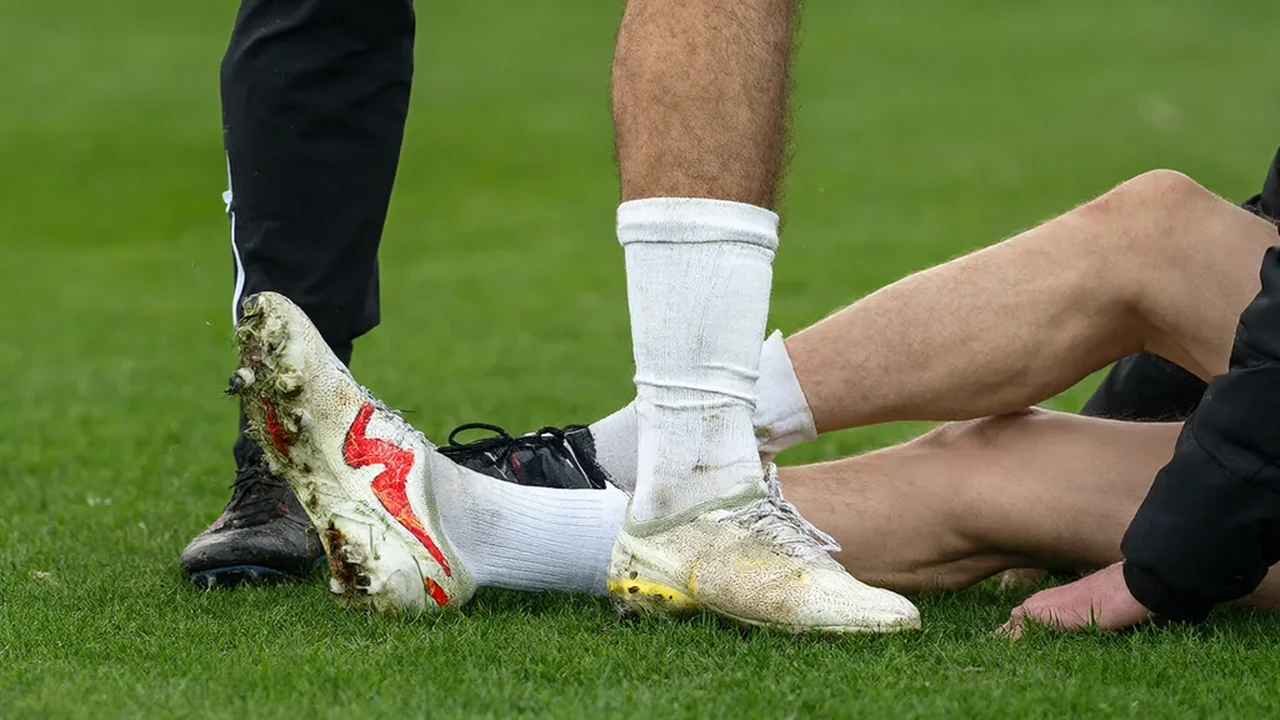
Ankle Sprains in Football: Grades and Return Timelines
What grade 1, 2 and 3 ankle sprains mean, the weeks attached to each and why the same ankle keeps rolling.
2026-10-18
Injury round-up: what clubs said after the October break
Six clubs, one weekend, and very few return dates: what the October injury updates actually said.
2026-10-18
FPL flags and chance of playing explained
Yellow, orange, red: how FPL percentages are set and what to do with a 25 per cent flag.
2026-10-18
European nights, rotation and recurrence risk
Three games in seven days is where hamstrings go: load, rest and rotation before Europe.
2026-10-18