
European nights, rotation and recurrence risk
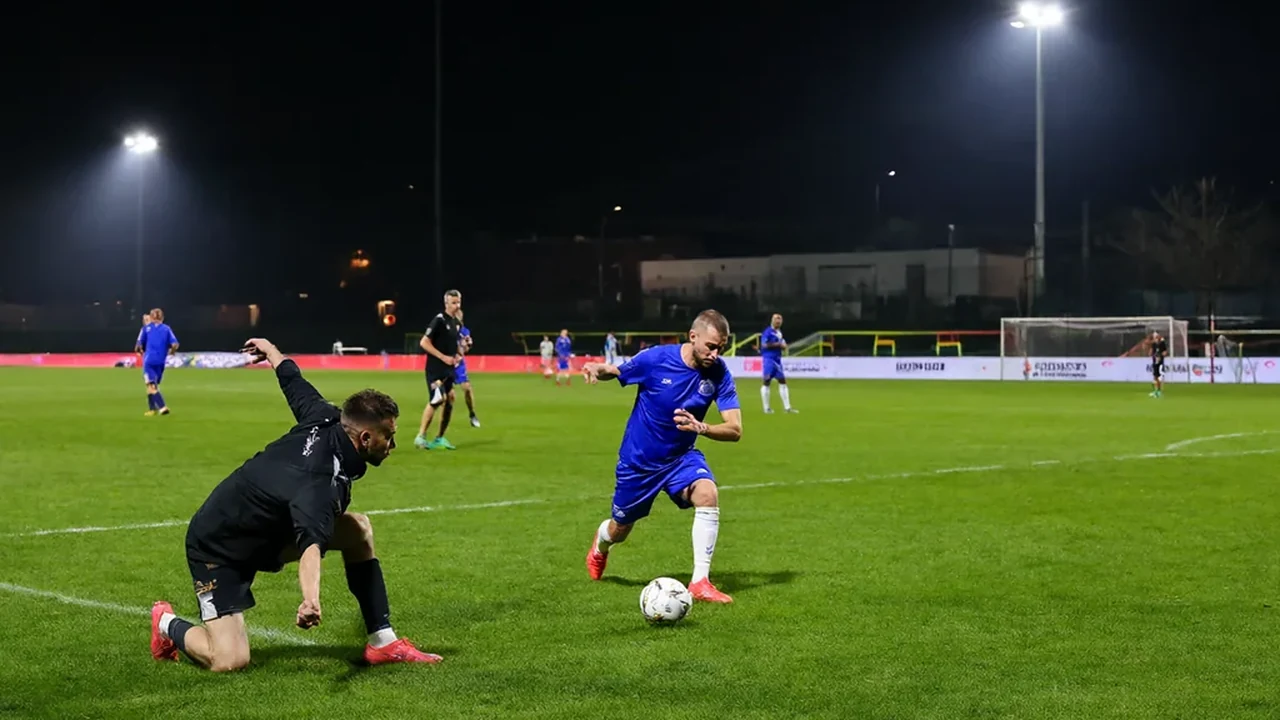
The October calendar is the first point in the season where domestic and European fixtures collide at full speed. Arsenal played Lille in the Champions League with five players ruled out and two doubts. Manchester United travelled to Atletico Madrid with six players missing. Liverpool were reported to have ten possible absentees for the LASK trip, then played Brentford on the Saturday and faced Villarreal in the midweek that followed. None of that is coincidence. It is the predictable output of a schedule that asks the same twenty players to recover faster than their tissue can repair.
Why midweek football changes the injury picture
A Saturday-to-Saturday week gives a starter six days between matches. A Saturday-to-Tuesday European week gives him three. The match itself is not the main problem. The problem is that the two days after a match are when the muscle is repairing, and a three-day turnaround removes one of those days entirely. Soft tissue injuries are not usually caused by a single sprint. They are caused by a muscle being asked for maximal output while still carrying damage from the previous effort, which is exactly the state a player is in on the third day.
Three games in seven days
The genuinely dangerous block is three matches in seven or eight days, which is what a league game, a European away trip and another league game produce. Recovery is not linear across that block. The first match costs two days, the second costs three, and by the third the player is carrying residual fatigue in both hamstrings and both calves. This is where managers make the choice between a full-strength European night and a rotated league side, and it is also where most recurrence injuries happen, because the player who returns from a minor issue is precisely the one whose tissue is least prepared for the load.
The 72-hour rule
Medical departments generally want 72 hours between competitive appearances for a player at full intensity, and they will accept less only for goalkeepers, centre-backs and players with low sprint loads. A winger or a pressing midfielder asked to play Saturday and Tuesday is being asked to do something the research says raises injury risk. That is why rotation at European level is not cowardice. It is the only lever a manager has, short of dropping out of a competition, and it is why the teams with the deepest squads tend to have the shortest injury lists in November.
The international break is part of the load
October is unusual because the club schedule pauses for an international window and then restarts at full density. Players who travelled with national teams arrive back with long flights, different training methods and two competitive matches in their legs, while players who stayed behind get a rare clear week. The round-up of injury news for every club after the extended break is a reminder that the window is not rest. It is a second fixture list with a different manager, and the clubs that suffer most in late October are usually the ones whose key players played twice abroad and then started again on the Saturday.
What rotation actually looks like
Rotation is rarely six changes. It is usually two or three, chosen by position rather than by reputation. Full-backs and wingers come off first, because they cover the most high-speed distance. One central midfielder is swapped for a fresh one. The centre-back pair is kept, because continuity there is worth more than freshness. A striker who has played every minute is the exception, since number nines often tolerate load better than wide players. When a squad is already short, as Liverpool's was before LASK, the manager has fewer levers, and the players who would normally be rested are the ones who end up playing twice.
Recurrence is the real cost
A first hamstring injury is a two to four week problem. A recurrence is a six to ten week problem, and it carries a much higher chance of becoming a season-long pattern. That asymmetry is why clubs are conservative with players returning from soft tissue injuries even when the fixture list is demanding. It is also why a player can be medically fit and still not selected: fitness is a test result, readiness is a load judgement. The distinction is explained in more detail in our guide to hamstring grades and timelines.
Reading a European team sheet
The team sheet on a European night tells you what the manager thinks of the next league fixture. If a key winger starts on Tuesday, expect him on the bench on Saturday. If he is on the bench on Tuesday, he starts at the weekend. The players to watch are the ones who appear in both, because they are the ones the medical staff are monitoring most closely. When a club is already carrying eight or ten absentees, as Arsenal and Tottenham were this month, that group of ever-presents gets smaller and the risk concentrates.
| Schedule shape | Rest between games | Typical selection | Recurrence risk |
|---|---|---|---|
| One league game a week | 6 days or more | Full strength | Baseline |
| Saturday to Tuesday | 3 days | 2 to 3 changes | Moderate |
| Saturday to Wednesday | 3 days | 2 to 4 changes | Moderate |
| Saturday, Tuesday, Saturday | 3 and 3 | 4 to 6 changes | High |
| Three games in seven days | 2 and 2 | 5 or more changes | High |
| First start after injury | Not applicable | 60 to 70 minutes | Highest |
- Three days between matches removes the main repair day, not just recovery time.
- Wingers and full-backs are rotated first because of high-speed distance.
- Centre-back pairs are usually kept intact for continuity.
- A recurrence costs two to three times as long as the original injury.
For supporters the practical takeaway is simple. A European midweek is a load event, and load events produce injuries two to ten days later, which is why the injury news after a European round often looks unrelated to the match itself. The players who break down in the following league game are usually the ones who played 90 minutes on the Tuesday. That pattern is visible in almost every October, and it is the reason the long-term injury picture in a season is often decided before the winter, in a stretch of fixtures nobody remembers.
Related analysis
Ankle Sprains in Football: Grades and Return Timelines
What grade 1, 2 and 3 ankle sprains mean, the weeks attached to each and why the same ankle keeps rolling.
2026-10-18
Injury round-up: what clubs said after the October break
Six clubs, one weekend, and very few return dates: what the October injury updates actually said.
2026-10-18
How to read club injury statements
A practical decoder for the phrases clubs use, from out for weeks to no timescale at all.
2026-10-18
FPL flags and chance of playing explained
Yellow, orange, red: how FPL percentages are set and what to do with a 25 per cent flag.
2026-10-18