
How Predicted Lineups Are Actually Built

Every Thursday evening, an hour after the clubs post their training galleries, a small industry publishes its probable XIs for the weekend. The best of them get nine or ten names right out of eleven. That hit rate looks like clairvoyance until you see the method: predicted lineups are built from a checklist of clues, and most of the clues are public.
The exercise matters because the real teamsheet only appears sixty minutes before kick-off, when league rules oblige clubs to submit it. Everything before that moment is inference. Here is where the inference comes from.
The five sources that build a probable XI
Start with the Friday press conference, the only scheduled injury briefing of the week. Add the training ground reports from the beat writers who watch the open fifteen minutes. Layer on the suspension list, which is arithmetic rather than rumour: anyone on four yellow cards is one booking from missing out, anyone sent off last week is definitely gone. Then factor the fixture calendar, because a Champions League away game on Wednesday changes Saturday's eleven more reliably than any quote. Finally, weigh the manager's history, because some coaches rotate by habit and others would play the same eleven through a hailstorm.
None of these sources is reliable alone. The craft is in the weighting, and the weighting changes by club. A quote from a manager who bluffs weekly is worth less than silence from one who never does.

How the pieces fit together
The working method of a good lineup predictor runs in a fixed order.
- Lock the certainties first: suspended players out, long-term injuries out, the untouchable starters in.
- Read the Friday briefing for the doubtful names, and assign each one a probability rather than a guess.
- Check the midweek minutes, because a player who went ninety on Wednesday in Europe is a rotation candidate.
- Map the manager's habits: who he trusts in big games, which youngster he never benches twice running.
- Flag the one position where the evidence conflicts, because that is where the prediction will fail if it fails anywhere.
| Source | What it tells you | Reliability |
|---|---|---|
| Suspension list | Definite absences, simple arithmetic. | Absolute |
| Friday presser | Official status of every doubt. | High, with bluff allowance |
| Training reports | Who worked with the first group. | Moderate to high |
| Midweek minutes | Rotation pressure by position. | Moderate |
| Manager history | Habits in similar fixtures. | Context layer |

The beat reporter, the unsung source
Behind every accurate predicted XI stands a profession most fans never think about: the club correspondent, the journalist assigned to one team for an entire season. The beat reporter attends every press conference, watches every open training window, and builds the relationships that turn official vagueness into usable information. When a national site publishes a confident lineup prediction for a mid-table club, the confidence usually traces back to one person who has watched that club train two hundred times.
The information economy around them is tiered. The broadcast section of a Friday briefing goes out immediately, so television audiences hear the injury list first. The written section sits under embargo, traditionally until late that evening, which is why Saturday morning newspapers carry the fuller picture. Fan channels and aggregators then compress both into a probable eleven by midnight. Each layer adds interpretation, and each interpretation can drift from the source, which is why the sharpest readers always trace a prediction back to the beat reporter closest to the training ground.
Why the last name is always the hardest
Accuracy in this field compounds over a season. A predictor who logs every press conference, every training report and every midweek minute for one club develops a feel that no casual reader can match, and the published hit rates of the best lineup services, sitting around nine of eleven names across a campaign, reflect exactly that accumulated knowledge. The method is learnable. The feel is rented, one Friday at a time.
Talk to anyone who publishes these XIs and they will tell you the same thing. Ten names are routine. The eleventh, usually a wing spot or the second striker, is where two players have equal claims and the manager has been deliberately ambiguous all week. That contested slot is also where the value sits for everyone reading the prediction, from fantasy managers to opposing analysts. When a predicted XI shows a coin-flip position, treat the whole sheet as a probability distribution, not a promise. The teamsheet at kick-off is the only fact in this entire chain.
Related analysis

Predicted Lineups Under a New Manager: What Changes
Why the old baseline stops working, which clues matter in the first three games and when the teamsheet actually lands.
2026-10-18
Cup Keepers: How Clubs Plan Goalkeeper Rotation
The only position with a standing rotation agreement. Why second-choice keepers get the cups, and when that rule breaks.
2026-09-01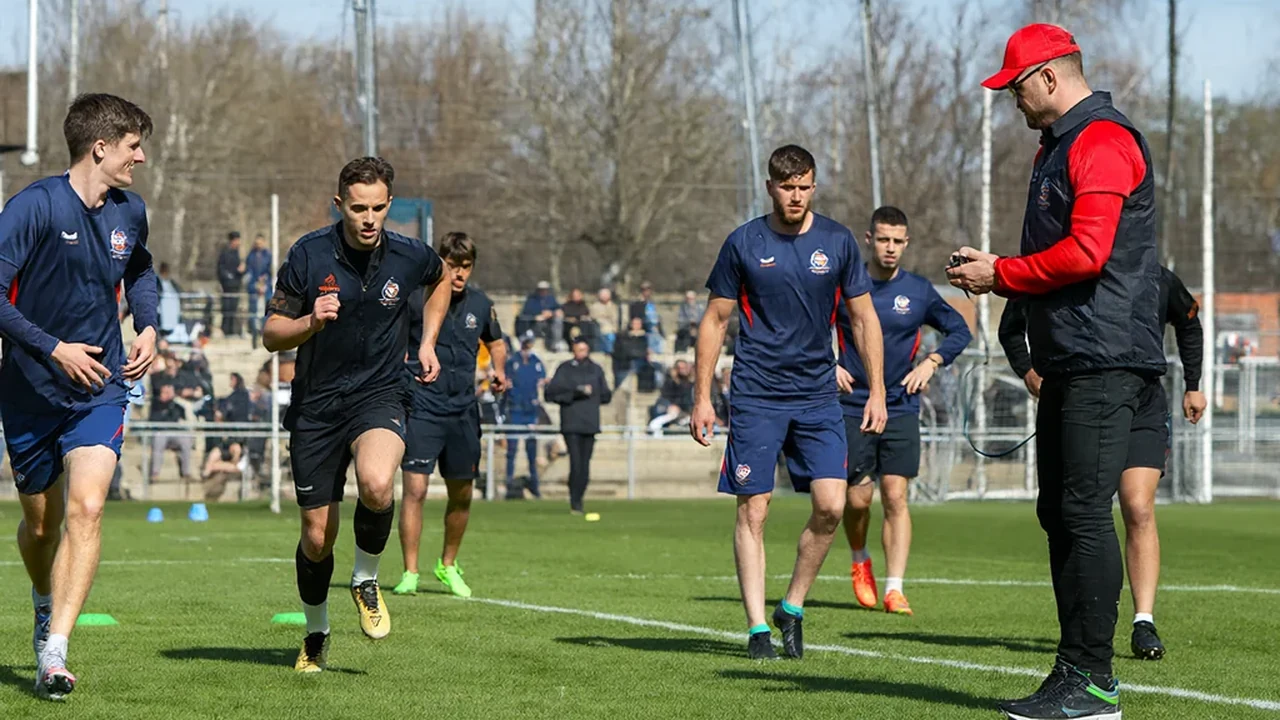
Late Fitness Tests: What They Really Mean
A late fitness test is a private audition with real stakes. What actually happens on the morning of a match.
2026-08-29
Rotation Risk: When Fixture Congestion Bites
Three games in eight days means somebody sits. How managers choose who rests, and which fixtures always trigger rotation.
2026-08-25