
How Clubs Set Injury Return Dates

Six to eight weeks, says the club statement, and six to eight weeks it almost never is. The return date attached to an injury announcement is the most quoted and least understood number in football: part medical estimate, part expectation management, part educated guess wrapped in a range. Understanding how clubs actually produce that number changes how you read every injury update.
The honest version is this. A return date is not a prediction of when a player will walk back onto the pitch. It is the output of a staged testing process, and each stage has to be passed before the next one starts.
The data underneath the estimate
Modern rehab is measured, not felt. The GPS vest that players wear in training, the same one that tracks match loads, follows them through every running session of the comeback, logging top speed, accelerations and total distance against pre-injury baselines. Strength is quantified on force plates and dynamometers: the injured leg is expected to reach around ninety percent of the healthy leg's output before full training is even discussed. The medical team also watches the acute-to-chronic workload ratio, the comparison between what the player did this week and what his body has been conditioned for, because spikes in that ratio are where soft-tissue injuries breed.
The framework governing it all is the return-to-sport continuum published by the International Olympic Committee's consensus group in 2016: return to participation, then return to sport, then return to performance. In plain terms, training alone, training with the team, and only then being genuinely selectable. Clubs that quote a return date are usually pointing at the middle stage, and supporters read it as the last.

Why clubs speak in ranges
The vagueness in club statements is engineered, and the reasons are practical.
- Healing varies by player: age, injury history and even sleep quality move the timeline by weeks.
- One setback, a common event in week three or four, resets the clock, so the range absorbs it.
- A precise public date hands the player a deadline he may chase at the cost of a full recovery.
- Agents, contract talks and transfer plans all hang on the same number, and clubs prefer it fuzzy.
- The final clearance belongs to a staged test, not a calendar, and no doctor signs off in advance.
| Stage | What is measured | Who signs it off |
|---|---|---|
| Reintroduction to running | Pain response, stride symmetry on GPS data. | Physiotherapist |
| High-speed work | Top speed versus pre-injury baseline. | Sports scientist |
| Strength symmetry | 90 percent of the healthy leg on force testing. | Strength coach and doctor |
| Modified team training | Non-contact drills, monitored workload. | Medical team and manager |
| Full training and minutes | Complete sessions, then bounce game or bench. | Manager, on medical green light |

The vocabulary of the club statement
Club medical statements have their own dialect, and each stock phrase maps to a stage of the process. Surgery was successful means the procedure happened without complication, nothing more; it says nothing about the rehab. He will begin his rehabilitation means the player is still weeks from grass. He is stepping up his recovery signals the running stages have begun, usually the halfway mark of the absence. Ahead of schedule is the phrase supporters love and medical staff hate, because it creates a public expectation the staged tests still have to justify.
The most significant statement is the one that says nothing at all. When a club confirms an injury but omits any timeframe, the medical team is genuinely uncertain, which in practice means one of three things: the scan was ambiguous, surgery is being considered, or the injury is the kind whose healing varies by months rather than weeks. Experienced readers of team news treat the missing number as the loudest sentence in the statement, and they are usually right to.
Reading the estimate like an insider
The next frontier is already visible in the biggest medical departments: machine learning models trained on thousands of rehabs, predicting individual healing curves from the first scan. Early results suggest the models beat the old week-count estimates, but they change the method rather than the principle. The player still passes through the same gates. The prediction of when he reaches them is simply getting sharper.
The working translation is simpler than the science. An announced range of two to three weeks means a minor issue with a staged return, expect the longer end. Four to six weeks means a real tear with a test the player has not yet taken. No timeframe at all means the club genuinely does not know, which usually means surgery or a scan that raised more questions than it answered. The number that actually matters never appears in the statement: the date of the first full training session. That session, not the estimate, is what separates a rehab from a return.
Related analysis
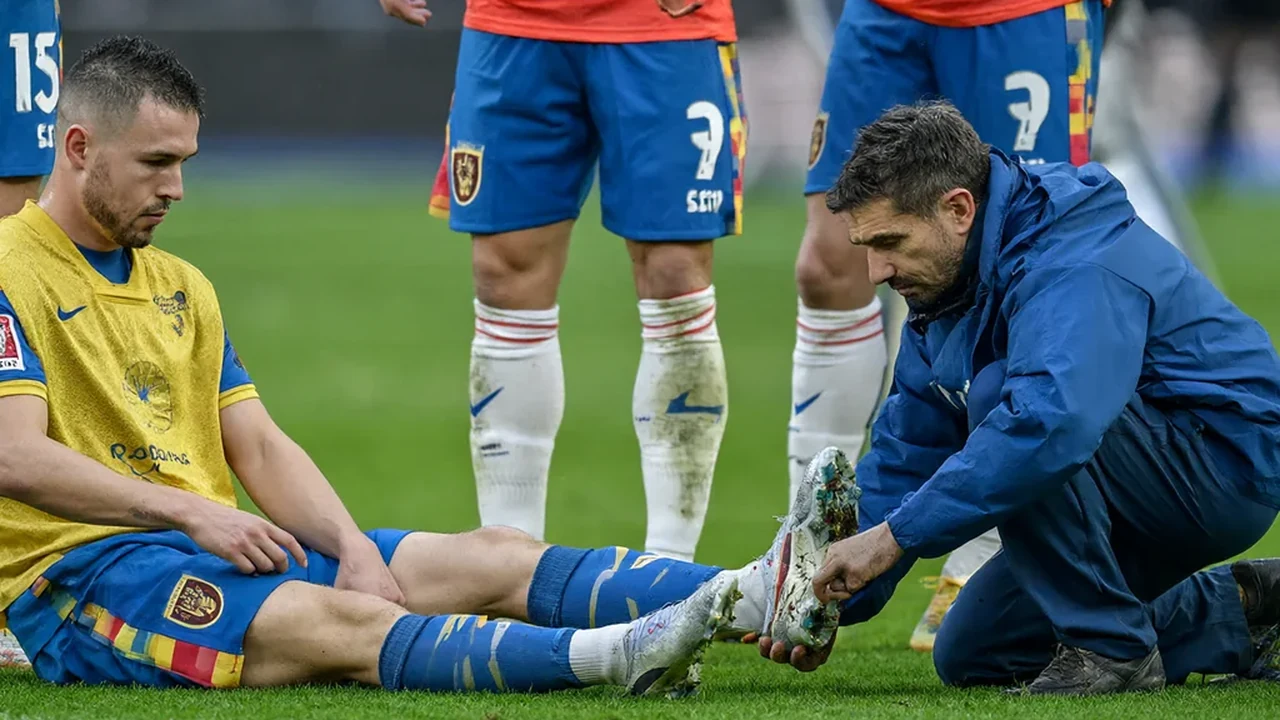
Metatarsal Fractures: Football Return Timelines Explained
Avulsion, Jones, shaft and stress fractures heal at different speeds. The absence each usually carries and why dates slip.
2026-10-18
Season-Ending Injuries: Insurance and Squad Cost
A season-ending diagnosis is a sporting blow and a balance sheet event. How clubs price a year on the treatment table.
2026-09-02
Behind-Closed-Doors Friendlies: A Fitness Guide
Before the stadium comes the empty training pitch game nobody reports. How bounce matches bridge rehab and the real thing.
2026-08-31
Coming Back Too Early: The Reinjury Trap
The cruellest injury in football is the same one twice. Why comebacks fail and who pays for the rush.
2026-08-28